Buku & Publikasi Ilmiah
Karya Tulis, Buku Teks, dan Riset Bereputasi
Dokumentasi karya tulis ilmiah oleh Assoc. Prof. Fahmi Yusuf, S.Kom, MMSI, Ph.D. dalam mendukung literasi Sistem Informasi, rekayasa Artificial Intelligence terapan, serta standarisasi penjaminan mutu perguruan tinggi.
Daftar Buku Terbitan Ber-ISBN
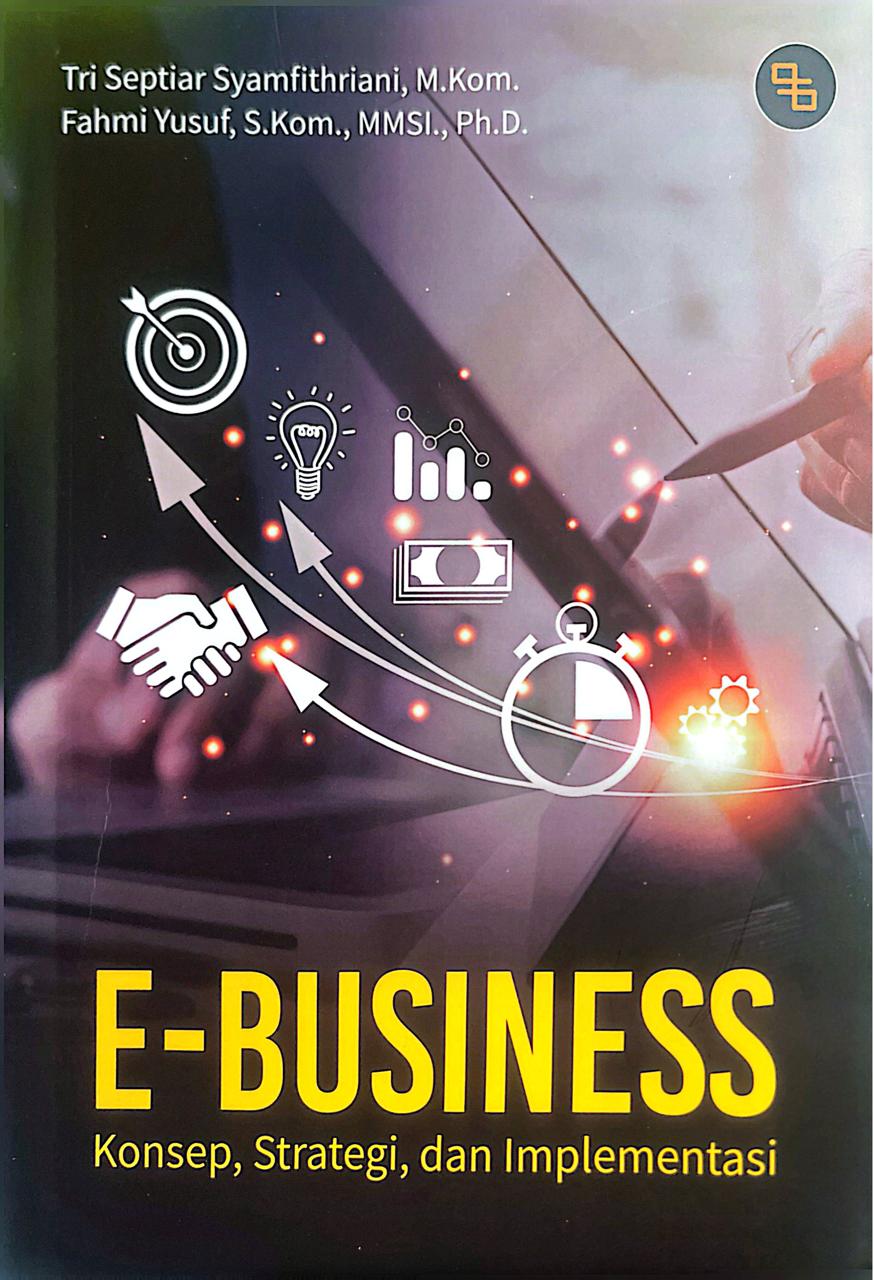
E-BUSINESS Konsep, Strategi, dan Implementasi
Di tengah era yang didefinisikan ulang oleh teknologi, ke mampuan untuk membangun dan mengelola bisnis di ruang digital bukan lagi sebuah keahlian khusus, melainkan sebuah literasi fundamental. Setiap hari kita berinteraksi dengan produk dan layanan yang lahir dari inovasi digital—dari cara kita memesan transportasi, membeli kebutuhan sehari-hari, hingga cara kita belajar dan bekerja. Namun, dibalik kemudahan antarmuka aplikasi yang kita gunakan, terdapat sebuah arsitektur kompleks yang terdiri dari strategi, teknologi, proses, dan tata kelola yang berjalan secara harmonis. Buku ini lahir dari sebuah keyakinan sederhana: cara terbaik untuk memahami sebuah sistem yang kompleks adalah dengan mencoba membangunnya sendiri. Oleh karena itu, buku ajar ini tidak dirancang sebagai kumpulan teori yang pasif, melainkan sebagai sebuah “bengkel” atau “peta panduan” yang akan mengajak Anda, para pembaca, untuk menjadi seorang arsitek e-business. Dari halaman pertama hingga terakhir, kita akan menempuh sebuah perjalanan yang terstruktur—sebuah simulasi dari proses nyata yang dihadapi oleh para inovator dan wirausahawan digital di seluruh dunia. Perjalanan kita akan dimulai dengan mengasah kepekaan untuk menemukan “harta karun” yang tersembunyi di sekitar kita: masalah nyata (pain point) yang layak untuk diselesaikan. Kita akan belajar cara memvalidasi sebuah ide, bukan dengan asumsi, tetapi dengan bukti. Selanjutnya, kita akan masuk ke “ruang mesin” untuk membedah komponen-komponen teknologi utama yang menjadi tulang punggung bisnis digital modern, dari platform e-commerce hingga infrastruktur cloud. Setelah itu, kita akan beralih peran menjadi seorang manajer proyek, mempelajari strategi implementasi menggunakan pendekatan Agile yang lincah, lengkap dengan cara merencanakan proyek dan mengelola risikonya. Dan sebagai penutup, kita akan membekali diri dengan “jangkar moral dan hukum”—memahami pentingnya keamanan, kepatuhan terhadap regulasi, dan etika digital untuk membangun bisnis yang tidak hanya menguntungkan, tetapi juga tepercaya dan bertanggung jawab. Setiap bab dalam buku ini dirancang untuk saling membangun dan secara langsung mendukung sebuah Proyek Berbasis Pembelajaran (PBL), di mana Anda ditantang untuk menerapkan setiap konsep yang dipelajari ke dalam rancangan solusi e-business Anda sendiri. Tujuan akhirnya bukanlah menciptakan produk yang sempurna, melainkan menanamkan sebuah pola pikir, tepatnya pola pikir seorang pemecah masalah yang mampu mengubah sebuah keluhan sederhana menjadi konsep bisnis yang terstruktur dan tervalidasi. Selamat membaca, dan selamat membangun!
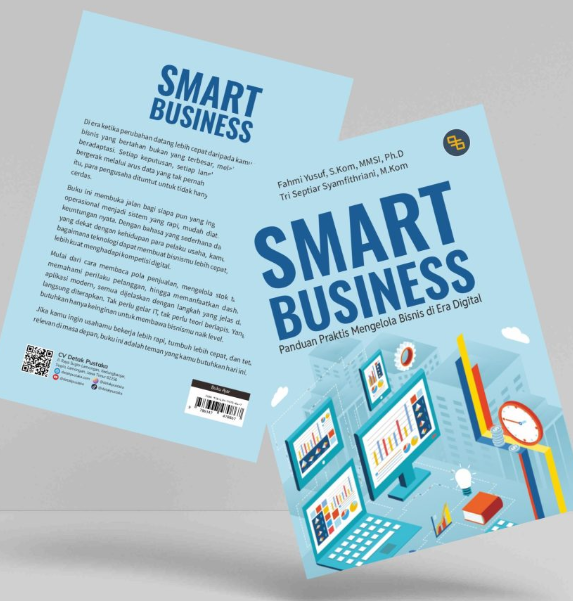
SMART BUSINESS (Panduan Praktis Mengelola Bisnis di Era Digital)
Di era ketika perubahan datang lebih cepat daripada kamu sempat bernapas, bisnis yang bertahan bukan yang terbesar, melainkan yang paling siap beradaptasi. Setiap keputusan, setiap langkah, dan setiap peluang kini bergerak melalui arus data yang tak pernah berhenti. Di tengah hiruk-pikuk itu, para pengusaha dituntut untuk tidak hanya bekerja keras, tetapi bekerja cerdas. Buku ini membuka jalan bagi siapa pun yang ingin mengubah kekacauan operasional menjadi sistem yang rapi, mudah diatur, dan mendatangkan keuntungan nyata. Dengan bahasa yang sederhana dan contoh dunia nyata yang dekat dengan kehidupan para pelaku usaha, kamu akan menemukan bagaimana teknologi dapat membuat bisnismu lebih cepat, lebih efisien, dan lebih kuat menghadapi kompetisi digital. Mulai dari cara membaca pola penjualan, mengelola stok tanpa drama, memahami perilaku pelanggan, hingga memanfaatkan dashboard dan aplikasi modern, semua dijelaskan dengan langkah yang jelas dan dapat langsung diterapkan. Tak perlu gelar IT, tak perlu teori berlapis. Yang kamu butuhkan hanya keinginan untuk membawa bisnismu naik level. Jika kamu ingin usahamu bekerja lebih rapi, tumbuh lebih cepat, dan tetap relevan di masa depan, buku ini adalah teman yang kamu butuhkan hari ini.
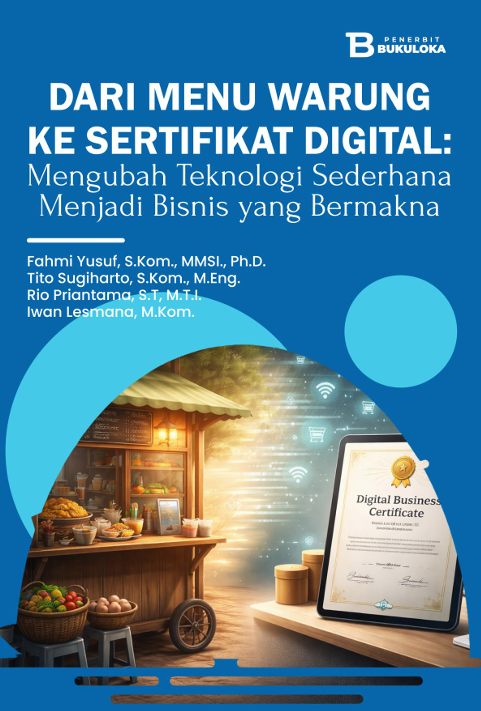
Dari Menu Warung ke Sertifikat Digital: Mengubah Teknologi Sederhana Menjadi Bisnis yang Bermakna
Buku ini disusun dari pengalaman, pengamatan, serta refleksi terhadap bagaimana teknologi sederhana dapat memberikan dampak yang nyata bagi masyarakat, khususnya bagi pelaku usaha kecil dan menengah. Di era digital saat ini, teknologi tidak lagi menjadi sesuatu yang eksklusif bagi perusahaan besar atau sektor industri yang maju. Teknologi justru dapat dimanfaatkan oleh siapa saja, termasuk pemilik warung kecil, pelaku usaha rumahan, hingga komunitas lokal yang ingin mengembangkan usahanya secara lebih profesional dan berkelanjutan. Melalui kreativitas dan pemahaman yang tepat, teknologi sederhana dapat diubah menjadi alat yang mampu meningkatkan nilai usaha, memperluas jangkauan pasar, serta memberikan manfaat yang lebih besar bagi masyarakat. Semoga buku ini dapat memberikan manfaat dan menjadi langkah kecil menuju transformasi digital yang lebih inklusif.
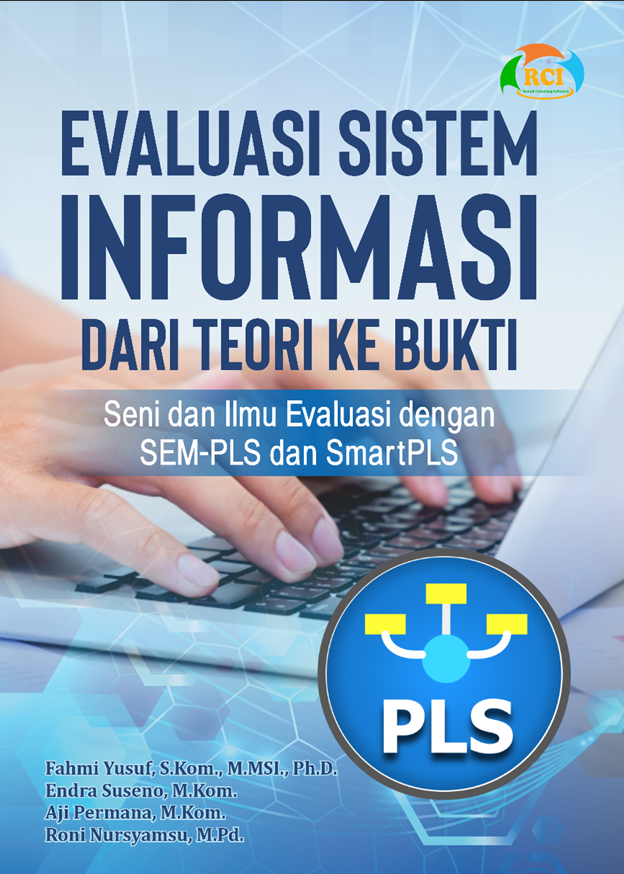
EVALUASI SISTEM INFORMASI: DARI TEORI KE BUKTI Seni dan Ilmu Evaluasi dengan SEM-PLS dan SmartPLS
Senja di Kuala Lumpur, 2019. Seorang mahasiswa S3 kebingungan menatap output SmartPLS. Ia sudah membaca buku SEM dan mengikuti berbagai tutorial, tetapi tetap merasa ada jurang antara teori dan data nyata. Di meja sebelah, seorang praktisi IT juga mengeluhkan hal serupa: butuh panduan berbasis data, bukan sekadar intuisi. Dari kegelisahan itulah buku ini lahir—sebagai jembatan antara rigor akademik dan kebutuhan praktis. Selama dua puluh tahun sebagai akademisi dan konsultan, saya melihat banyak orang menggunakan SmartPLS sebagai black box atau justru terjebak dalam detail teknis tanpa memahami gambaran besar. Buku ini hadir dengan pendekatan berbeda: dimulai dari cerita nyata, mengintegrasikan teori evaluasi sistem informasi (TAM, TOE, HotFit, ISSM, TTF), metodologi kuantitatif, dan aplikasi SEM-PLS secara utuh. Studi kasusnya berbasis pengalaman organisasi di Indonesia, bukan contoh fiktif. Fokusnya bukan hanya “bagaimana”, tetapi juga “mengapa”. Ditujukan untuk mahasiswa, peneliti, dosen, dan praktisi, buku ini menjadi panduan konseptual sekaligus aplikatif dalam mengevaluasi sistem informasi secara berbasis bukti.
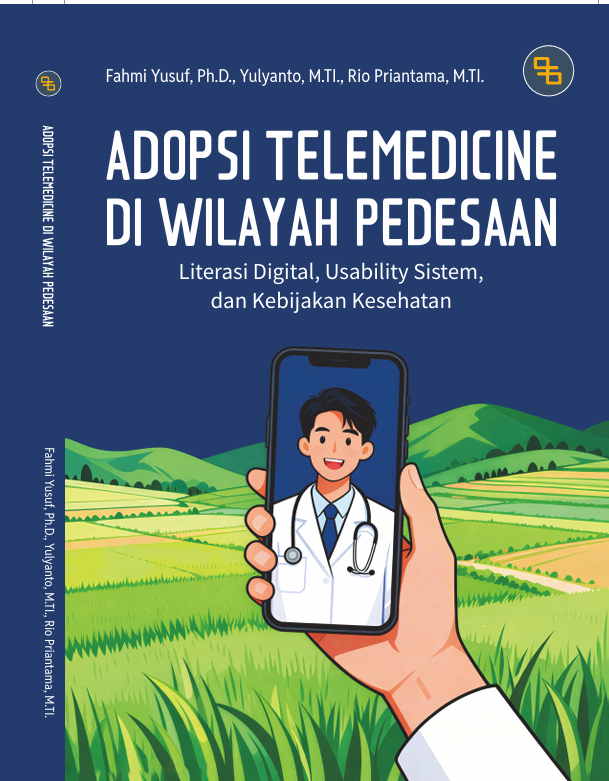
ADOPSI TELEMEDICINE DI WILAYAH PEDESAAN Literasi Digital, Usability Sistem, dan Kebijakan Kesehatan
Perkembangan teknologi digital telah membawa perubahan dalam cara layanan kesehatan dihadirkan dan diakses oleh masyarakat. Di wilayah pedesaan, di mana jarak, waktu, dan ketersediaan fasilitas kerap menjadi tantangan, telemedicine hadir sebagai bagian dari upaya memperluas jangkauan layanan kesehatan. Kehadirannya tidak hanya mencerminkan kemajuan teknologi, tetapi juga perubahan dalam pola interaksi antara masyarakat dan sistem kesehatan. Buku ini mengajak pembaca melihat telemedicine dalam konteks kehidupan pedesaan secara lebih dekat dan kontekstual. Penggunaan layanan kesehatan digital tidak berlangsung secara seragam. Ia dijalani melalui proses mengenal, mencoba, menyesuaikan diri, hingga memaknai manfaatnya dalam keseharian. Literasi digital, kemudahan penggunaan sistem, serta kebijakan dan tata kelola kesehatan daerah membentuk kerangka yang memengaruhi cara telemedicine digunakan dan dipertahankan oleh masyarakat. Melalui pembahasan yang memadukan perspektif literasi digital, usability sistem, dan kebijakan kesehatan, buku ini menempatkan telemedicine sebagai praktik kesehatan yang iii Adopsi Telemedicine di wilayah pedesaan hidup di tengah masyarakat pedesaan. Telemedicine tidak dipahami semata-mata sebagai solusi teknis, melainkan sebagai bagian dari dinamika sosial, institusional, dan teknologi yang saling berkelindan dalam pelayanan kesehatan. Buku ini ditujukan bagi akademisi, praktisi kesehatan, dan pembuat kebijakan yang ingin memahami adopsi telemedicine secara lebih utuh dan membumi. Dengan pendekatan yang kontekstual, buku ini membuka ruang pemahaman tentang bagaimana layanan kesehatan digital tumbuh, dijalani, dan dimaknai dalam realitas kehidupan masyarakat pedesaan Indonesia.
Buku Sistem Informasi: Studi Kasus dan Metode Analisis
Buku ini mengajak pembaca untuk menjelajahi dunia yang terus berkembang dengan pesat melalui lensa sistem informasi dan teknologi. Dalam era digital ini, peran kritis yang dimainkan oleh integrasi sistem informasi dan teknologi menjadi sorotan utama. Penulis membawa kita dalam perjalanan mendalam, mulai dari fondasi dasar sistem informasi hingga konsep-konsep teknologi mutakhir yang mengubah lanskap bisnis dan kehidupan sehari-hari. Pembaca akan diajak untuk memahami bagaimana perkembangan ini tidak hanya memengaruhi dunia bisnis, tetapi juga membetuk masyarakat global secara keseluruhan. Selain membahas aspek teknis, buku ini juga menyoroti dampak dalam pemanfaatan teknologi informasi. Berikut Daftar Isi Buku Ilmu Komputer yang berjudul Buku Sistem Informasi: Studi Kasus dan Metode Analisis, diantaranya: Manakala Data Memanggil: Duel SMOTE vs. Random Oversampling pada C45. Jejak Waktu Menuju Kelulusan: Melacak Faktor- Faktor Kunci dengan Regresi Logistik Biner. Teknologi, Niat, dan Pembelajaran: Mengupas Model Kesiapan di Dunia LMS E-Learning. Mencari Peta Terbaik: Duel K-Means dan K- Medoids dalam Penanganan Diare Balita.Membongkar Rahasia: Strategi K-Medoids untuk Segmentasi Pelanggan yang Efektif. Bridging the Gap: Fusion of Fuzzy C-Means and Simple Additive Weighting in Scholarship Decisions. Spesifikasi Buku Kategori Buku: Buku Ilmu Komputer Penulis : Fahmi Yusuf, Tri Septiar Syamfithriani, Nita Mirantika dan Ragel Trisudarmo Editor : Zakiyatur Rosidah Halaman : xii, 95 hlm, Uk: 15.5×23 cm ISBN : 978-623-02-8479-3 Tahun Terbit : 2024 Buku Sistem Informasi: Studi Kasus dan Metode Analisis ini diterbitkan oleh Penerbit Buku Pendidikan Deepublish.
Publikasi Jurnal Ilmiah & Prosiding
Artikel Riset Terindeks Scopus, SINTA & Google Scholar
A Mixed-Methods Design for Analyzing Telemedicine Adoption: An Information Systems Approach Integrating TAM–ISS, Digital Literacy, and Usability
This research employs a mixed-methods design to analyze telemedicine adoption in rural Indonesia by integrating the Technology Acceptance Model (TAM) and the Information System Success Model (ISS), extended with digital literacy and usability. A quantitative survey of 314 respondents was complemented by in-depth interviews with 50 participants and demographic analysis using chi-square and logistic regression. The quantitative findings reveal that the primary adoption construct is Usability → Perceived Ease of Use (PEOU) → Perceived Usefulness (PU) → Intention to Use (ITU) → Net Benefit (NB). Perceived usefulness emerged as the strongest predictor of both satisfaction and intention. Information Quality significantly influenced satisfaction, whereas System Quality did not, indicating that clear medical information outweighs technical system performance in shaping satisfaction. Similarly, usability directly did not affect PU but indirectly through PEOU, and digital literacy influenced PU but not PEOU. Demographic analysis confirmed that occupation was significant—students and healthcare workers acted as early adopters—while age and prior training were not, suggesting that adoption transcends generational boundaries due to the widespread penetration of the JKN Mobile platform. Qualitative insights enriched these findings by highlighting key barriers and enablers such as inconsistent interfaces, infrastructure limitations, privacy concerns, community-based socialization, and expectations for adaptive features like AI diagnostics and pharmacy integration. Overall, the research confirms that telemedicine adoption in rural Indonesia is shaped by the synergy of usability, digital literacy, information quality, and social context rather than by training or demographic variables alone.
Gamified Digital Intervention to Reduce Online Game Gambling Tendency among Youth: A TAM–SDT Evaluation
The rapid growth of online gaming has raised concerns about addictive behaviors among young people, particularly with the emergence of loot boxes that resemble gambling mechanisms. This study aims to examine the effectiveness of a gamification-based application as a preventive intervention for online gambling game addiction and to evaluate user acceptance through an extended Technology Acceptance Model (TAM). The research was conducted in two stages. In the pre-test phase, 588 respondents aged 15–25 completed a questionnaire measuring impulsivity, Internet Gaming Disorder (IGD), and loot box exposure. The results identified 169 individuals (28.7%) with addictive tendencies. In the intervention phase, 86 respondents from this group participated in a gamified stimulation program using a specially designed application. Data were analyzed using Partial Least Squares Structural Equation Modeling (PLS-SEM). The measurement model met reliability and validity requirements. Structural model analysis confirmed the classic TAM relationships: perceived ease of use significantly influenced perceived usefulness (β = .559, p < 0.001), perceived usefulness influenced attitude toward use (β = .385, P= 0.001), and attitude influenced behavioral
intention (β = .461, p < 0.001). In addition, Self-Determination Theory (SDT) significantly affected both attitude (β = .360, P= 0.003) and behavioral intention (β = .166, P= 0.038). However, Affective Visual Design (AVD) was not significant, and behavioral intention did not reduce addictive behavior (β = -0.109, P= 0.386). The model demonstrated predictive relevance for PU, ATT, and BI (Q² > 0), whereas ABT showed no predictive relevance (Q² = –0.003), indicating limited short-term behavioral predictability. This study contributes theoretically by extending TAM with SDT in the context of digital health interventions and practically by demonstrating the potential of gamification as a preventive tool. However, the short intervention period and limited sample size constrained its effectiveness in reducing addiction. Longer-term interventions and broader contextual factors are recommended for future research.
IMPLEMENTATION OF NATURAL LANGUAGE PROCESSING (NLP) BASED CHATBOT USING BERT MODEL TO IMPROVE DENTAL CLINIC SERVICES
The limited human resources in dental clinics often lead to delays in responding to patients' initial consultations, potentially reducing service quality and patient satisfaction. The advancement of Artificial Intelligence (AI) has encouraged the adoption of chatbots based on Natural Language Processing (NLP) to improve information service efficiency. This study aims to implement a chatbot using the Bidirectional Encoder Representations from Transformers (BERT) model to enhance consultation efficiency at the dental clinic of drg. Fahmi Nurdin. The system development method used is Agile, with stages including requirement analysis, user interface design, model training, and chatbot implementation. The dataset consists of 49 tags (topics) and 490 patterns (questions), formatted in JSON, and used to train the BERT model for intent classification and response generation. An accuracy score of 0.86 was obtained, along with a macro precision of 0.867, macro recall of 0.857, and a macro F1-score of 0.839, indicating that the model is capable of performing classification with a relatively balanced performance across all classes. Evaluation results show that the chatbot can provide relevant and accurate responses, accelerating the initial consultation process. This implementation is expected to help overcome human resource limitations, improve service quality, and strengthen patient trust in the clinic's services.
Implementation of a Convolutional Neural Network (CNN) for a Facial Recognition-Based Student Attendance System
The attendance system plays a crucial role in supporting the learning process and academic administration in various institutions, including the Faculty of Computer Science, Kuningan University. Currently, the attendance system used still relies on conventional methods, namely hard copy-based attendance sheets signed by students. This method has several disadvantages, such as a long time in recapitulating data to the academic system, the potential for signature manipulation, and the risk of losing or damaging documents. To overcome
these problems, this research proposes the application of face recognition technology based on Convolutional Neural Network (CNN). CNN is a development of Multi-layer Perceptron (MLP) specifically designed to process two-dimensional data, such as facial images. This research uses a prototype development model consisting of three main stages: (1) user needs analysis, (2) mock-up design, and (3) design testing. The face identification process produces a feature description that represents the characteristics of the detected face. This feature description is then compared with the face data stored in the database to perform matching. The test results using the K-Fold method show that the proposed model achieves an accuracy of 92%. Thus, this face recognition-based attendance system is expected to increase efficiency, reduce the potential for fraud, and provide a more modern and integrated attendance solution for the Faculty of Computer Science, Kuningan University.
SALES FORECASTING INFORMATION SYSTEM USING WEB-BASED TRIPLE EXPONENTIAL SMOOTHING METHOD (CASE STUDY: INTER SPORT)
Inter Sport Store, a retail business located in Kersana District, Brebes Regency, has been operating since 2017. The store faces ongoing challenges in inventory management, frequently encountering stock surpluses or shortages that result in losses of up to IDR 15 million per month. These issues primarily result from a manual ordering process that relies on subjective estimation, without the support of accurate data analysis. Furthermore, sales records are still maintained manually in notebooks, making it difficult to track data and analyze consumer demand effectively. This study proposes the development of a web-based sales forecasting system using the Triple Exponential Smoothing (TES) method, which can handle both trend and seasonal patterns simultaneously, providing higher accuracy for complex time-series data compared to Single or Double Exponential Smoothing methods. The system is developed using the prototype development method with UML design and implemented using Laravel framework and MySQL database for real-time access and data updates. Forecasting results for the Ortuseight Catalyst Legion FG – Aqua White soccer shoe yielded a Mean Absolute Percentage Error (MAPE) of 13.38%, which is considered within the "good" accuracy range. The implementation of this system successfully reduced overstock by 25% and improved inventory management efficiency. This forecasting system enhances operational efficiency and supports data-driven decision-making for store management.
Implementation of the Naïve Bayes Algorithm for Predicting Customer Credit Risk: A Case Study of KSP Mekar Jaya, Luragung
The Mekar Jaya Savings and Loan Cooperative (Luragung Branch) faces issues with non-performing loans stemming from creditworthiness assessments that remain subjective, relying on the "Five C’s of Credit" method. This study aims to develop a website for predicting customer credit risk by implementing the Naïve Bayes algorithm, enabling the cooperative to assess risk more objectively and accurately. The website was built using the Prototyping system development method, utilizing JavaScript, the Next.js framework, and a MySQL database. The dataset comprises 500 customer credit records, including attributes such as marital status, income, loan type, loan amount, installment amount, loan term, and collateral, alongside risk labels (high-risk vs. low-risk). The data was split into a training set of 350 records and a testing set of 150 records. Testing using a confusion matrix demonstrated that the Naïve Bayes algorithm achieved an accuracy rate of 98%.
Implementation of the Long Short-Term Memory Algorithm in a Chatbot for Dengue Fever Information and Education Services
Dengue fever is one of the most common infectious diseases in Indonesia. However, information regarding its prevention and treatment remains fragmented, with limited accessibility and availability. This study developed a chatbot integrating the Long ShortTerm Memory (LSTM) algorithm to answer various questions about dengue fever, including its symptoms, prevention, and treatment. The dataset used consists of questions and answers related to dengue fever, sourced from both primary and secondary data. The data undergoes a series of preprocessing steps before being used for model development, training, and evaluation. The test results indicate that the developed model achieved an accuracy of 100% during validation with a loss function value of 0.0221. These findings demonstrate that the LSTM-based chatbot can provide accurate and relevant responses, making it an effective tool for educating the public in an interactive and efficient manner. This implementation is expected to offer an innovative solution for increasing public awareness of dengue fever prevention and management
Information technology readiness and acceptance model for social media adoption in blended learning: A case study in higher education institutions in West Java, Indonesia
Technological developments, including the internet, and learning opportunities are increasing. This also encourages the development of learning strategies and models. The blended learning model is applied in almost all universities in Indonesia and the world. With so many universities in Indonesia, implementing blended learning is a challenging thing because it requires a lot of technological preparation and human resources. This research aims to identify factors, develop a model, and evaluate the model to see the readiness and acceptance of technology for adopting social media in blended learning among private higher education institutes students in Indonesia. The population of this research is students from private higher education institutes in West Java, Indonesia, who are directly involved in using blended learning and social media. This quantitative research used a research instrument with five-Likert’s scale. The research population was 663,307, with a sample of 384 students spread across West Java. The contribution of this research is to make a significant contribution to the theoretical framework by expanding and refining existing concepts, providing a more comprehensive understanding of the readiness and acceptance factors for the adoption of social media in blended learning so that it has the potential to provide information to learning planners at private higher education institutes in West Java, Indonesia to help make the right decisions and optimize blended learning planning using social media technology. These findings statistically explain that 19 of 31 the hypotheses are the accepted ones. Moreover, nine of 12 variables influenced the readiness and acceptance of social media technology in blended learning based on the student perception among the private higher education institutions. They were the technological literacy factor, perceived validity, perceived trust, and technology readiness factors, namely optimism and Innovativeness, and technology acceptance factors, namely perceived effectiveness, perceived easy to use, intention to use and usage behaviour.
Evaluating The Performace of Electronic Medical Records In Monitoring Nutritional Status and Stunting Risk Rural Areas Using The E-PPGBM Application
Stunting among children under five remains a critical global health concern, particularly in rural areas with limited access to comprehensive health services. The adoption of Electronic Medical Records (EMR), exemplified by the e-PPGBM application used at Public Health Centers (PHCs) in Indonesia, holds substantial promise for improving the monitoring of under-five nutritional status and early identification of stunting risks. Despite its potential, the effectiveness of EMR systems like e-PPGBM in rural PHCs has not been widely assessed. This study evaluates the performance of the e-PPGBM application using the ISO 25010:2011 software quality standard, focusing on six key characteristics: functionality, performance efficiency, usability, security, reliability, and maintainability. A multi-method approach involving black-box testing, scenario testing, stress testing, and usability questionnaires was applied, with responses gathered from 37 PHC personnel. Findings indicate that, while infrastructure and training limitations persist, the e-PPGBM application demonstrates overall effectiveness in tracking nutritional status and detecting stunting risk in Kuningan District, West Java, Indonesia. Notably, the application contributes to improved health service delivery. This study suggests the integration of predictive analytics for stunting risk, based on additional data from local health posts (posyandu), to enhance future usability and performance.
Extending The Hot-Fit Model With Information Literacy to Explain AI Adoption in High Schools
Artificial Intelligence (AI) is increasingly transforming educational practices by enabling more adaptive and personalized learning experiences in secondary schools. Nevertheless, previous applications of the Human–Organization–Technology Fit (HOT-Fit) model have given limited attention to the roles of information literacy and trust in influencing AI adoption. To address this gap, the present study expands the HOT-Fit framework by incorporating three additional constructs: information literacy, perceived validity, and perceived trust, in order to better explain AI readiness and adoption in educational settings. A quantitative approach was employed involving 316 senior high school students from Kuningan Regency, Indonesia. Data
were gathered using a structured questionnaire based on a five-point Likert scale and analyzed through Partial Least Squares Structural Equation Modeling (PLS-SEM) with SmartPLS v3.0 to evaluate 29 proposed hypotheses. The findings revealed that 21 hypotheses were statistically supported. Information literacy demonstrated a strong positive effect on perceived trust (β = 0.708; p < 0.001), as well as on system use, organizational structure, environmental support, and user satisfaction. In addition, system quality significantly contributed to user satisfaction, whereas service quality affected both system use and satisfaction. Among all relationships, net benefit exerted the strongest effect on action to use (β = 0.547; p < 0.001). The R² results for several endogenous constructs were above 0.50, indicating acceptable explanatory capability of the proposed model. Practically, the findings offer implications for educators, policymakers, and system developers in designing AI-supported learning environments by emphasizing the enhancement of digital literacy, service support, and system effectiveness for sustainable AI integration in schools.