Buku & Publikasi Ilmiah
Karya Tulis, Buku Teks, dan Riset Bereputasi
Dokumentasi karya tulis ilmiah oleh Assoc. Prof. Fahmi Yusuf, S.Kom, MMSI, Ph.D. dalam mendukung literasi Sistem Informasi, rekayasa Artificial Intelligence terapan, serta standarisasi penjaminan mutu perguruan tinggi.
Daftar Buku Terbitan Ber-ISBN
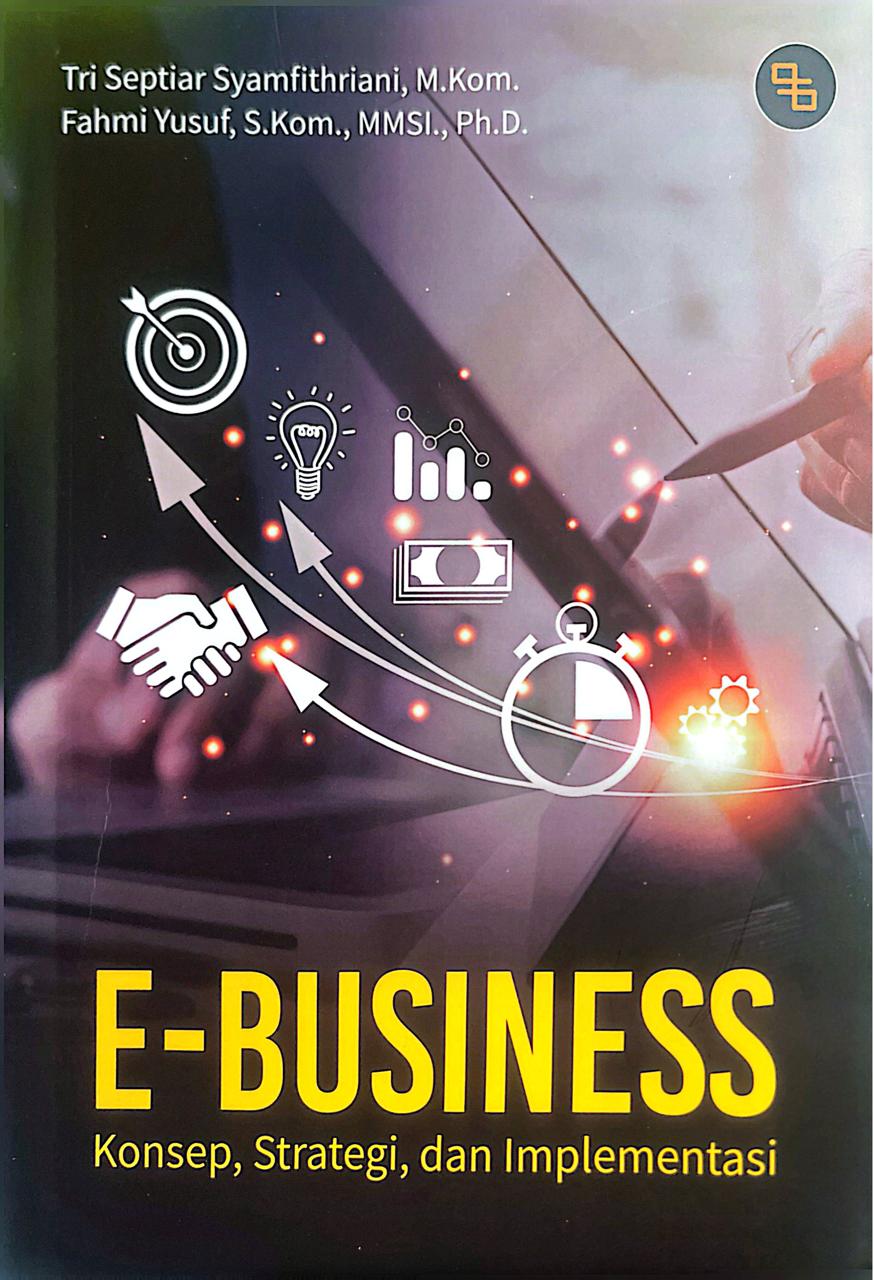
E-BUSINESS: Concepts, Strategy, and Implementation
In an era redefined by technology, the ability to build and manage a business in the digital space is no longer a niche skill but a fundamental form of literacy. Every day, we interact with products and services born of digital innovation—from how we book transportation and purchase daily necessities to how we learn and work. Yet, beneath the user-friendly interfaces of the apps we use lies a complex architecture of strategies, technologies, processes, and governance systems working in harmony. This book stems from a simple conviction: the best way to understand a complex system is to try building one yourself. Consequently, this textbook is not designed as a passive collection of theories, but rather as a "workshop" or "roadmap" that invites you—the reader—to become an e-business architect. From the first page to the last, we will embark on a structured journey—a simulation of the real-world processes faced by digital innovators and entrepreneurs across the globe. Our journey begins by honing our ability to discover the "hidden treasures" around us: real-world problems (pain points) worth solving. We will learn to validate ideas using evidence rather than assumptions. Next, we will step into the "engine room" to dissect the key technological components that form the backbone of modern digital businesses, ranging from e-commerce platforms to cloud infrastructure. We will then shift roles to become project managers, exploring implementation strategies through the Agile approach, including project planning and risk management. Finally, we will equip ourselves with "moral and legal anchors"—understanding the importance of security, regulatory compliance, and digital ethics—to build businesses that are not only profitable but also trustworthy and responsible. Each chapter in this book is designed to build upon the last and directly support a Project-Based Learning (PBL) initiative, challenging you to apply the concepts you learn to the design of your own e-business solution. The ultimate goal is not to create a perfect product, but to cultivate a mindset—specifically, that of a problem-solver capable of transforming a simple complaint into a structured, validated business concept. Happy reading, and happy developing!
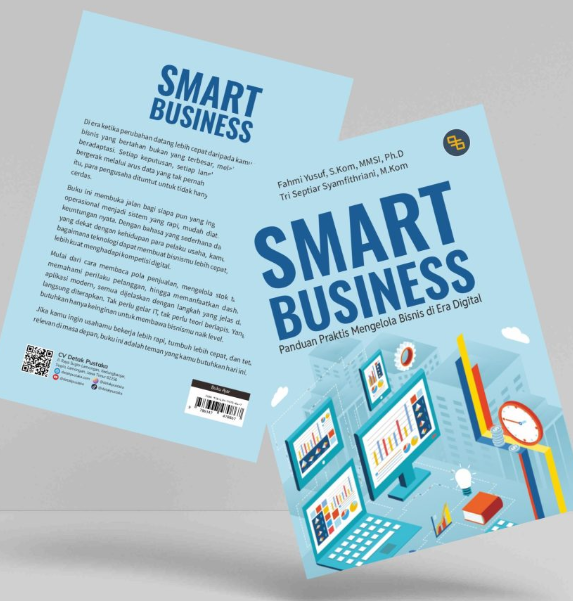
SMART BUSINESS (A Practical Guide to Managing a Business in the Digital Era)
In an era where change happens faster than you can catch your breath, the businesses that survive aren't necessarily the biggest—they are the ones best prepared to adapt. Every decision, every move, and every opportunity now flows through a ceaseless stream of data. Amidst this whirlwind, entrepreneurs are challenged to work not just hard, but smart. This book paves the way for anyone looking to transform operational chaos into a streamlined, manageable system that drives real profit. Through simple language and real-world examples that resonate with business owners, you will discover how technology can make your business faster, more efficient, and more resilient in the face of digital competition. From interpreting sales patterns and managing inventory without the drama to understanding customer behavior and leveraging modern dashboards and apps—everything is explained through clear, actionable steps. You don't need an IT degree or complex theories; all you need is the drive to take your business to the next level. If you want your business to run more smoothly, grow faster, and stay relevant in the future, this book is the companion you need today.
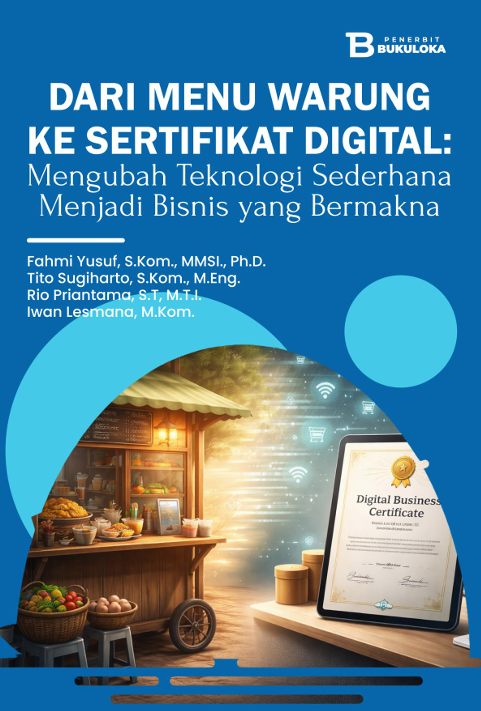
From Stall Menus to Digital Certificates: Transforming Simple Technology into a Meaningful Business
This book draws upon experiences, observations, and reflections regarding how simple technology can deliver tangible impacts for the community, particularly for small and medium-sized enterprises. In today’s digital era, technology is no longer the exclusive domain of large corporations or advanced industrial sectors. Instead, technology can be harnessed by anyone—from small shop owners and home-based entrepreneurs to local communities—seeking to develop their businesses in a more professional and sustainable manner. With creativity and the right understanding, simple technology can be transformed into a tool that enhances business value, expands market reach, and generates greater benefits for society. It is hoped that this book proves useful and serves as a small step toward a more inclusive digital transformation.
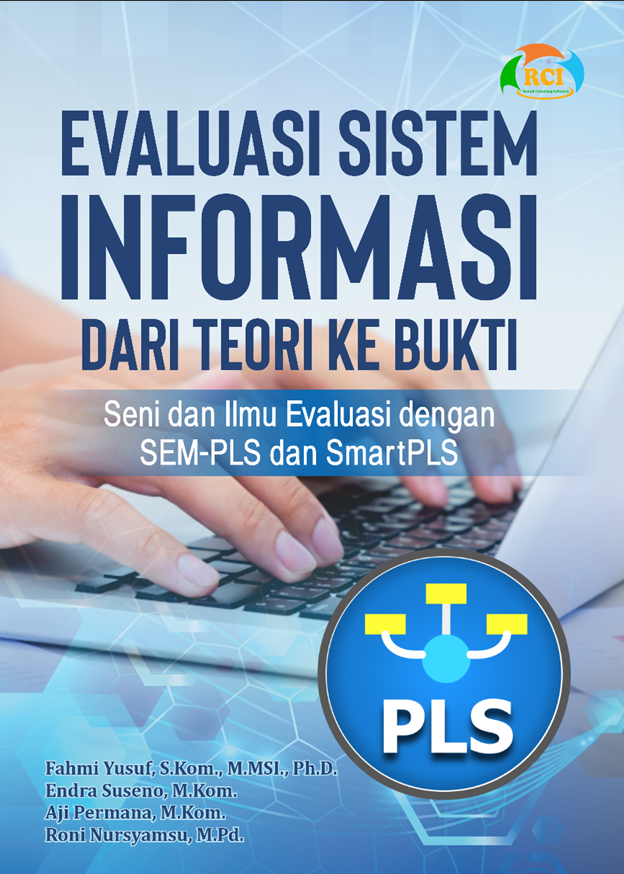
Information Systems Evaluation: From Theory to Evidence—The Art and Science of Evaluation using SEM-PLS and SmartPLS
Dusk in Kuala Lumpur, 2019. A PhD student stared in bewilderment at the SmartPLS output. Despite having read books on SEM and followed various tutorials, they still felt a gap between theory and real-world data. At a nearby table, an IT practitioner voiced a similar concern: the need for data-driven guidance rather than mere intuition. It was out of this shared unease that this book was born—serving as a bridge between academic rigor and practical needs. Throughout my twenty years as an academic and consultant, I have observed many people using SmartPLS as a "black box" or getting bogged down in technical details without grasping the big picture. This book takes a different approach: it begins with real-life stories and integrates information systems evaluation theories (TAM, TOE, HotFit, ISSM, TTF), quantitative methodology, and the comprehensive application of SEM-PLS. The case studies are based on the experiences of organizations in Indonesia, not on fictional examples. The focus is not merely on the "how," but also on the "why." Intended for students, researchers, lecturers, and practitioners alike, this book serves as both a conceptual and practical guide to evidence-based information systems evaluation.
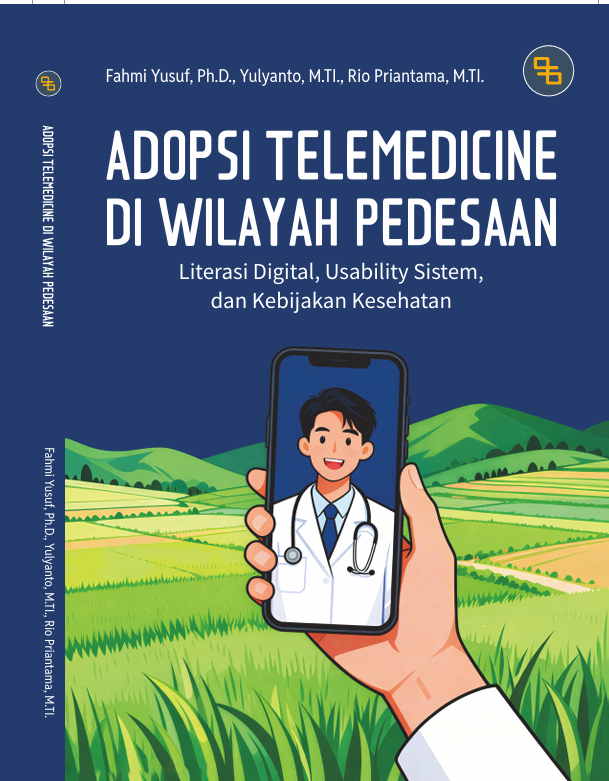
Telemedicine Adoption in Rural Areas: Digital Literacy, System Usability, and Health Policy
The evolution of digital technology has transformed how healthcare services are delivered to and accessed by the public. In rural areas—where distance, time, and facility availability often pose challenges—telemedicine has emerged as a means to expand the reach of healthcare services. Its presence reflects not only technological advancement but also a shift in the nature of interactions between the community and the healthcare system. This book invites readers to examine telemedicine within the context of rural life, offering a closer and more contextual perspective. The adoption of digital health services is not a uniform process; rather, it unfolds through stages of becoming familiar, experimenting, adapting, and ultimately finding meaning in the benefits within daily life. Factors such as digital literacy, system usability, and local health policies and governance shape the framework that influences how telemedicine is utilized and sustained by the community. By integrating perspectives on digital literacy, system usability, and health policy, this book frames telemedicine as a healthcare practice deeply embedded in rural society. Telemedicine is understood not merely as a technical solution, but as part of the intertwined social, institutional, and technological dynamics of healthcare delivery. This book is intended for academics, health practitioners, and policymakers seeking a comprehensive and grounded understanding of telemedicine adoption. Through its contextual approach, the book fosters an understanding of how digital health services grow, are experienced, and are interpreted within the realities of rural life in Indonesia.
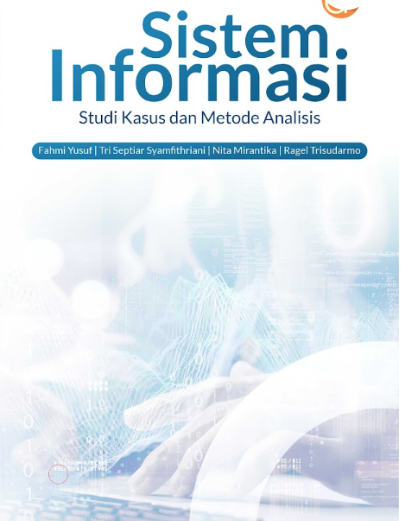
Information Systems: Case Studies and Analysis Methods
This book invites readers to explore a rapidly evolving world through the lens of information systems and technology. In this digital era, the critical role played by the integration of information systems and technology takes center stage. The authors take us on an in-depth journey, ranging from the fundamental principles of information systems to cutting-edge technological concepts that are transforming the business landscape and our daily lives. Readers will gain an understanding of how these developments not only impact the business world but also shape global society as a whole. Beyond technical aspects, the book also highlights the implications of utilizing information technology. The following is the table of contents for this computer science book, titled *Information Systems: Case Studies and Analysis Methods*: When Data Calls: A Duel Between SMOTE and Random Oversampling in C4.5. The Timeline to Graduation: Tracking Key Factors via Binary Logistic Regression. Technology, Intention, and Learning: Examining Readiness Models in the World of E-Learning LMS. Seeking the Best Map: A Duel Between K-Means and K-Medoids in Managing Toddler Diarrhea. Unlocking Secrets: K-Medoids Strategies for Effective Customer Segmentation. Bridging the Gap: Fusion of Fuzzy C-Means and Simple Additive Weighting in Scholarship Decisions. Book Specifications Category: Computer Science Authors: Fahmi Yusuf, Tri Septiar Syamfithriani, Nita Mirantika, and Ragel Trisudarmo Editor: Zakiyatur Rosidah Pages: xii, 95 pages; Size: 15.5 x 23 cm ISBN: 978-623-02-8479-3 Publication Year: 2024 *Information Systems: Case Studies and Analysis Methods* is published by Deepublish Educational Publishers.
Publikasi Jurnal Ilmiah & Prosiding
Artikel Riset Terindeks Scopus, SINTA & Google Scholar
A Mixed-Methods Design for Analyzing Telemedicine Adoption: An Information Systems Approach Integrating TAM–ISS, Digital Literacy, and Usability
This research employs a mixed-methods design to analyze telemedicine adoption in rural Indonesia by integrating the Technology Acceptance Model (TAM) and the Information System Success Model (ISS), extended with digital literacy and usability. A quantitative survey of 314 respondents was complemented by in-depth interviews with 50 participants and demographic analysis using chi-square and logistic regression. The quantitative findings reveal that the primary adoption construct is Usability → Perceived Ease of Use (PEOU) → Perceived Usefulness (PU) → Intention to Use (ITU) → Net Benefit (NB). Perceived usefulness emerged as the strongest predictor of both satisfaction and intention. Information Quality significantly influenced satisfaction, whereas System Quality did not, indicating that clear medical information outweighs technical system performance in shaping satisfaction. Similarly, usability directly did not affect PU but indirectly through PEOU, and digital literacy influenced PU but not PEOU. Demographic analysis confirmed that occupation was significant—students and healthcare workers acted as early adopters—while age and prior training were not, suggesting that adoption transcends generational boundaries due to the widespread penetration of the JKN Mobile platform. Qualitative insights enriched these findings by highlighting key barriers and enablers such as inconsistent interfaces, infrastructure limitations, privacy concerns, community-based socialization, and expectations for adaptive features like AI diagnostics and pharmacy integration. Overall, the research confirms that telemedicine adoption in rural Indonesia is shaped by the synergy of usability, digital literacy, information quality, and social context rather than by training or demographic variables alone.
Gamified Digital Intervention to Reduce Online Game Gambling Tendency among Youth: A TAM–SDT Evaluation
The rapid growth of online gaming has raised concerns about addictive behaviors among young people, particularly with the emergence of loot boxes that resemble gambling mechanisms. This study aims to examine the effectiveness of a gamification-based application as a preventive intervention for online gambling game addiction and to evaluate user acceptance through an extended Technology Acceptance Model (TAM). The research was conducted in two stages. In the pre-test phase, 588 respondents aged 15–25 completed a questionnaire measuring impulsivity, Internet Gaming Disorder (IGD), and loot box exposure. The results identified 169 individuals (28.7%) with addictive tendencies. In the intervention phase, 86 respondents from this group participated in a gamified stimulation program using a specially designed application. Data were analyzed using Partial Least Squares Structural Equation Modeling (PLS-SEM). The measurement model met reliability and validity requirements. Structural model analysis confirmed the classic TAM relationships: perceived ease of use significantly influenced perceived usefulness (β = .559, p < 0.001), perceived usefulness influenced attitude toward use (β = .385, P= 0.001), and attitude influenced behavioral
intention (β = .461, p < 0.001). In addition, Self-Determination Theory (SDT) significantly affected both attitude (β = .360, P= 0.003) and behavioral intention (β = .166, P= 0.038). However, Affective Visual Design (AVD) was not significant, and behavioral intention did not reduce addictive behavior (β = -0.109, P= 0.386). The model demonstrated predictive relevance for PU, ATT, and BI (Q² > 0), whereas ABT showed no predictive relevance (Q² = –0.003), indicating limited short-term behavioral predictability. This study contributes theoretically by extending TAM with SDT in the context of digital health interventions and practically by demonstrating the potential of gamification as a preventive tool. However, the short intervention period and limited sample size constrained its effectiveness in reducing addiction. Longer-term interventions and broader contextual factors are recommended for future research.
IMPLEMENTATION OF NATURAL LANGUAGE PROCESSING (NLP) BASED CHATBOT USING BERT MODEL TO IMPROVE DENTAL CLINIC SERVICES
The limited human resources in dental clinics often lead to delays in responding to patients' initial consultations, potentially reducing service quality and patient satisfaction. The advancement of Artificial Intelligence (AI) has encouraged the adoption of chatbots based on Natural Language Processing (NLP) to improve information service efficiency. This study aims to implement a chatbot using the Bidirectional Encoder Representations from Transformers (BERT) model to enhance consultation efficiency at the dental clinic of drg. Fahmi Nurdin. The system development method used is Agile, with stages including requirement analysis, user interface design, model training, and chatbot implementation. The dataset consists of 49 tags (topics) and 490 patterns (questions), formatted in JSON, and used to train the BERT model for intent classification and response generation. An accuracy score of 0.86 was obtained, along with a macro precision of 0.867, macro recall of 0.857, and a macro F1-score of 0.839, indicating that the model is capable of performing classification with a relatively balanced performance across all classes. Evaluation results show that the chatbot can provide relevant and accurate responses, accelerating the initial consultation process. This implementation is expected to help overcome human resource limitations, improve service quality, and strengthen patient trust in the clinic's services.
Implementation of a Convolutional Neural Network (CNN) for a Facial Recognition-Based Student Attendance System
The attendance system plays a crucial role in supporting the learning process and academic administration in various institutions, including the Faculty of Computer Science, Kuningan University. Currently, the attendance system used still relies on conventional methods, namely hard copy-based attendance sheets signed by students. This method has several disadvantages, such as a long time in recapitulating data to the academic system, the potential for signature manipulation, and the risk of losing or damaging documents. To overcome
these problems, this research proposes the application of face recognition technology based on Convolutional Neural Network (CNN). CNN is a development of Multi-layer Perceptron (MLP) specifically designed to process two-dimensional data, such as facial images. This research uses a prototype development model consisting of three main stages: (1) user needs analysis, (2) mock-up design, and (3) design testing. The face identification process produces a feature description that represents the characteristics of the detected face. This feature description is then compared with the face data stored in the database to perform matching. The test results using the K-Fold method show that the proposed model achieves an accuracy of 92%. Thus, this face recognition-based attendance system is expected to increase efficiency, reduce the potential for fraud, and provide a more modern and integrated attendance solution for the Faculty of Computer Science, Kuningan University.
SALES FORECASTING INFORMATION SYSTEM USING WEB-BASED TRIPLE EXPONENTIAL SMOOTHING METHOD (CASE STUDY: INTER SPORT)
Inter Sport Store, a retail business located in Kersana District, Brebes Regency, has been operating since 2017. The store faces ongoing challenges in inventory management, frequently encountering stock surpluses or shortages that result in losses of up to IDR 15 million per month. These issues primarily result from a manual ordering process that relies on subjective estimation, without the support of accurate data analysis. Furthermore, sales records are still maintained manually in notebooks, making it difficult to track data and analyze consumer demand effectively. This study proposes the development of a web-based sales forecasting system using the Triple Exponential Smoothing (TES) method, which can handle both trend and seasonal patterns simultaneously, providing higher accuracy for complex time-series data compared to Single or Double Exponential Smoothing methods. The system is developed using the prototype development method with UML design and implemented using Laravel framework and MySQL database for real-time access and data updates. Forecasting results for the Ortuseight Catalyst Legion FG – Aqua White soccer shoe yielded a Mean Absolute Percentage Error (MAPE) of 13.38%, which is considered within the "good" accuracy range. The implementation of this system successfully reduced overstock by 25% and improved inventory management efficiency. This forecasting system enhances operational efficiency and supports data-driven decision-making for store management.
Implementation of the Naïve Bayes Algorithm for Predicting Customer Credit Risk: A Case Study of KSP Mekar Jaya, Luragung
The Mekar Jaya Savings and Loan Cooperative (Luragung Branch) faces issues with non-performing loans stemming from creditworthiness assessments that remain subjective, relying on the "Five C’s of Credit" method. This study aims to develop a website for predicting customer credit risk by implementing the Naïve Bayes algorithm, enabling the cooperative to assess risk more objectively and accurately. The website was built using the Prototyping system development method, utilizing JavaScript, the Next.js framework, and a MySQL database. The dataset comprises 500 customer credit records, including attributes such as marital status, income, loan type, loan amount, installment amount, loan term, and collateral, alongside risk labels (high-risk vs. low-risk). The data was split into a training set of 350 records and a testing set of 150 records. Testing using a confusion matrix demonstrated that the Naïve Bayes algorithm achieved an accuracy rate of 98%.
Implementation of the Long Short-Term Memory Algorithm in a Chatbot for Dengue Fever Information and Education Services
Dengue fever is one of the most common infectious diseases in Indonesia. However, information regarding its prevention and treatment remains fragmented, with limited accessibility and availability. This study developed a chatbot integrating the Long ShortTerm Memory (LSTM) algorithm to answer various questions about dengue fever, including its symptoms, prevention, and treatment. The dataset used consists of questions and answers related to dengue fever, sourced from both primary and secondary data. The data undergoes a series of preprocessing steps before being used for model development, training, and evaluation. The test results indicate that the developed model achieved an accuracy of 100% during validation with a loss function value of 0.0221. These findings demonstrate that the LSTM-based chatbot can provide accurate and relevant responses, making it an effective tool for educating the public in an interactive and efficient manner. This implementation is expected to offer an innovative solution for increasing public awareness of dengue fever prevention and management
Information technology readiness and acceptance model for social media adoption in blended learning: A case study in higher education institutions in West Java, Indonesia
Technological developments, including the internet, and learning opportunities are increasing. This also encourages the development of learning strategies and models. The blended learning model is applied in almost all universities in Indonesia and the world. With so many universities in Indonesia, implementing blended learning is a challenging thing because it requires a lot of technological preparation and human resources. This research aims to identify factors, develop a model, and evaluate the model to see the readiness and acceptance of technology for adopting social media in blended learning among private higher education institutes students in Indonesia. The population of this research is students from private higher education institutes in West Java, Indonesia, who are directly involved in using blended learning and social media. This quantitative research used a research instrument with five-Likert’s scale. The research population was 663,307, with a sample of 384 students spread across West Java. The contribution of this research is to make a significant contribution to the theoretical framework by expanding and refining existing concepts, providing a more comprehensive understanding of the readiness and acceptance factors for the adoption of social media in blended learning so that it has the potential to provide information to learning planners at private higher education institutes in West Java, Indonesia to help make the right decisions and optimize blended learning planning using social media technology. These findings statistically explain that 19 of 31 the hypotheses are the accepted ones. Moreover, nine of 12 variables influenced the readiness and acceptance of social media technology in blended learning based on the student perception among the private higher education institutions. They were the technological literacy factor, perceived validity, perceived trust, and technology readiness factors, namely optimism and Innovativeness, and technology acceptance factors, namely perceived effectiveness, perceived easy to use, intention to use and usage behaviour.
Evaluating The Performace of Electronic Medical Records In Monitoring Nutritional Status and Stunting Risk Rural Areas Using The E-PPGBM Application
Stunting among children under five remains a critical global health concern, particularly in rural areas with limited access to comprehensive health services. The adoption of Electronic Medical Records (EMR), exemplified by the e-PPGBM application used at Public Health Centers (PHCs) in Indonesia, holds substantial promise for improving the monitoring of under-five nutritional status and early identification of stunting risks. Despite its potential, the effectiveness of EMR systems like e-PPGBM in rural PHCs has not been widely assessed. This study evaluates the performance of the e-PPGBM application using the ISO 25010:2011 software quality standard, focusing on six key characteristics: functionality, performance efficiency, usability, security, reliability, and maintainability. A multi-method approach involving black-box testing, scenario testing, stress testing, and usability questionnaires was applied, with responses gathered from 37 PHC personnel. Findings indicate that, while infrastructure and training limitations persist, the e-PPGBM application demonstrates overall effectiveness in tracking nutritional status and detecting stunting risk in Kuningan District, West Java, Indonesia. Notably, the application contributes to improved health service delivery. This study suggests the integration of predictive analytics for stunting risk, based on additional data from local health posts (posyandu), to enhance future usability and performance.
Extending The Hot-Fit Model With Information Literacy to Explain AI Adoption in High Schools
Artificial Intelligence (AI) is increasingly transforming educational practices by enabling more adaptive and personalized learning experiences in secondary schools. Nevertheless, previous applications of the Human–Organization–Technology Fit (HOT-Fit) model have given limited attention to the roles of information literacy and trust in influencing AI adoption. To address this gap, the present study expands the HOT-Fit framework by incorporating three additional constructs: information literacy, perceived validity, and perceived trust, in order to better explain AI readiness and adoption in educational settings. A quantitative approach was employed involving 316 senior high school students from Kuningan Regency, Indonesia. Data
were gathered using a structured questionnaire based on a five-point Likert scale and analyzed through Partial Least Squares Structural Equation Modeling (PLS-SEM) with SmartPLS v3.0 to evaluate 29 proposed hypotheses. The findings revealed that 21 hypotheses were statistically supported. Information literacy demonstrated a strong positive effect on perceived trust (β = 0.708; p < 0.001), as well as on system use, organizational structure, environmental support, and user satisfaction. In addition, system quality significantly contributed to user satisfaction, whereas service quality affected both system use and satisfaction. Among all relationships, net benefit exerted the strongest effect on action to use (β = 0.547; p < 0.001). The R² results for several endogenous constructs were above 0.50, indicating acceptable explanatory capability of the proposed model. Practically, the findings offer implications for educators, policymakers, and system developers in designing AI-supported learning environments by emphasizing the enhancement of digital literacy, service support, and system effectiveness for sustainable AI integration in schools.